AI is transforming software development faster than anyone expected. It already assists with large portions of feature development, testing, and refactoring; and its role will only expand.
But teams are hitting a hard limit.
AI-generated code often appears correct while failing in subtle, systemic ways. Not at the level of individual files or pull requests, but over time, across features, at the boundaries between systems. A function passes its tests. A PR looks clean. But the code quietly violates architectural decisions made months ago, or contradicts domain rules documented in a spec nobody prompted the model with.
This isn't a tooling problem. It's a verification problem.
The gap that's opening up
The industry is racing toward automated generation. Verification isn't keeping pace.
In most teams today, multiple developers generate code simultaneously using partial context and their own interpretation of the system. AI reviews AI-generated changes. Documentation drifts behind implementation. The feedback loops that once connected code to intent; design reviews, architectural oversight, institutional knowledge; are being outpaced.
The result isn't always obvious breakage. It's gradual divergence. Features stay internally consistent while shared assumptions quietly fall apart. By the time the inconsistencies surface, they're expensive: rework, missed deadlines, security issues caught late, compliance failures.
Code review alone can't fix this. Large language models are optimized to produce plausible outputs, not to enforce consistency across a system or challenge assumptions that were never made explicit.
What we're building
Predictable Code applies mathematical verification to modern development workflows. The goal is to make AI-generated code:
- Verifiable against specifications and intent, not just syntax and tests
- Coordinated across parallel development, so independent work stays aligned
- Traceable over time, so you can audit how implementation relates to intent
We're not building another linter or another code review bot. We're building infrastructure that treats system-level correctness as a first-class constraint; something that can be checked, enforced, and maintained as code evolves.
Why us
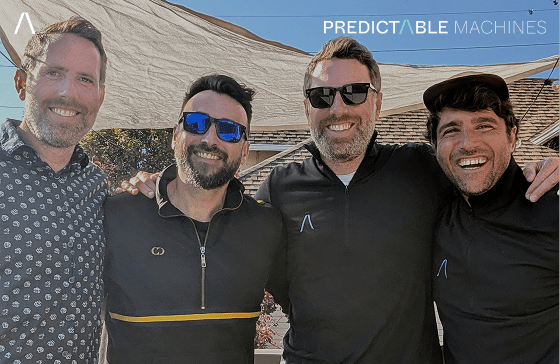
Our background is in building and operating complex systems where control and correctness mattered more than speed: long-lived codebases, regulated environments, systems that couldn't afford to drift.
We've seen what happens when verification is an afterthought. We're building Predictable Code to make it structural.
Follow along
Predictable Code is still taking shape, you can leave your email to follow the project as it evolves.
If this reflects what you're seeing in modern software development, you can leave your email to follow the project as it evolves.
👉 Join the updates. 2026 will be a formative year for Predictable Code.